
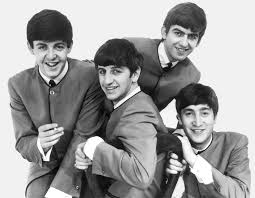
Not too long ago I wrote a blog piece entitled “Music Hath Charms” in which I argued for the softening and transformational nature of music (adding a plug for choir directors with the suggestion they were mostly all underpaid). One person who read the piece called my attention to some (shall we say) less edifying music and said, “What about this music?” I replied: “Good point.” My respondent was right: not all music hath charms to soothe the savage breast. Indeed, some music hath charms to incite a savage breast or even to create savagery in the human breast where it did not exist before. All music hath charms but sometimes the charms are harmful.
This is especially true about music that glorifies and promotes harmful things such as violence, sexual conquest, or greed for money. Our Lord said that what fills the heart overflows from the mouth (Luke 6:45) and it also overflows in a person’s actions. Briefly put, if a person feeds upon and fills their heart with violence, eventually that violence will be manifest through their actions. Our newsfeeds are full of such crimes (especially American newsfeeds where often it contains a racial component). Part of the answer to violence, sexual promiscuity, and greed in our society includes care of what we listen to and watch. (And read, assuming some degree of literacy.)
This means that parents must exercise control over what kinds of music their young children listen to (and, in fact, over all their technological interactions such as on the internet or their I-phones). St. Paul wrote that “Bad company ruins good morals” (1 Corinthians 15:33) and that now includes the company we keep musically. Parents should ask: what kind of values are my children imbibing and internalizing through the music they listen to? Waiting until they are adolescents and then lamenting their bad and violent characters is too late. The formation of their character as Christians (or even as decent citizens and good people) must begin long before that.
That does not mean that children must only listen to Christian music or what is sometimes called CCM, “contemporary Christian music” (i.e. shlock) or that they must only hear classical music or liturgical hymns. A more generous and wide-ranging diet (I almost said “a catholic diet”) is both allowed and desirable. Shielding them from harmful influences, both musical and literary, does not mean keeping them locked up in a fundamentalist fortress or a cultural hothouse or turning the family home into a monastery. But it does mean that their first and basic diet should concentrate on things that are not harmful.
What things precisely? I admit that I am probably the last person to ask about specifics. My own phone is full of Gordon Lightfoot, Peter Paul and Mary, Simon and Garfunkel, Mary Chapin Carpenter and (don’t judge me) Olivia Newton-John, whose first 1970 hit “If Not for You” was written by Bob Dylan. Yep; I’m that old. (I also have a bit of Led Zeppelin because it reminds me of my high school days.) Those not born in the Jurassic period as I was will have a better list of good modern music. But the point is that certain music should be avoided while the heart is young, open, and vulnerable. After the child’s character begins to form properly one may safely branch out more. A literary parallel would be that one should read Beatrix Potter (or even Harry Potter) and then Charles Dickens before diving into Mein Kampf or Mao’s Little Red Book.
I am aware that paranoia can present a danger and that it is possible for frightened parents to exercise a kind of stranglehold on their children, terrified that if they listen to a certain piece of music or read a certain book all will be lost. Indeed, I have heard stories of fundamentalist parents denouncing and denying their children Rowling’s Harry Potter series or even (more absurdly) Lewis’ Narnia series or Tolkien’s Lord of the Rings because they had magicians in them. As Paul Simon once sang, “paranoia strikes deep in the heartland”. It was in response to such fundamentalist paranoia that I was once prevailed upon to throw out many of my old LPs. (Fool that I was.)
History provides some embarrassing examples of such musical paranoia. Back before my time Elvis Presley was denounced and shunned because his hips moved too provocatively when he sang and the Beatles were banned because (weird as it sounds today when looking at old photos such as the one inset above) “their hair was too long”. (This was the same sort of paranoia that led the Catholic League of Decency to denounce Marilyn Monroe movies as immoral and dangerous.) Such examples are cautionary tales. The path of parental wisdom lies in finding a balance between paranoia and responsibility. When in doubt, ask other Christian parents or your priest.
A part of such responsibility involves the recognition that you are not and should not be your child’s friend. Friends stick together and support one another, offering consolation and opposition to experienced tyranny—including the supposed parental tyranny of parents telling their children that, no, they may not listen to violent music, get a tattoo at age six, or go out to play in the traffic. No doubt such boundaries and prohibitions will provoke cries of outrage from the oppressed six year old, tears and resentment, and will attract the support of other six year olds who will tell your child that the world is indeed a hard place.
My late dad had a response to all such youthful protests. He said, “Tough.” Like all his generation, he knew that friends support their friends unconditionally and tell them that playing in traffic is their God-given right. Parents keep their children safe and alive.
Parents, if they are good parents, cannot be their young child’s friend. (Maybe they can be later, when they are old enough to drink and vote and drive you to your nursing home.) Parents have a more important job to do, one that is part comforter, part benefactor, part trainer—and part police. It is their job to use their badge and deny young children the use of music which will one day prove harmful to their souls.
All music hath charms, some good and inspiring and healing, and some soul-destroying and deceiving. There is, of course, a spectrum in such things, with some music clearly wonderful and some music clearly horrendous and some music in between. Discernment, with all its agonizing subjectivity, is required.
In such cases, perhaps a line from another context might be helpful. In 1964 U.S. Supreme Court Justice Potter Steward was ruling in the obscenity case of Jacobellis vs. Ohio and the court was struggling to find a definition of “hard-core pornography”. Justice Steward famously said, “I shall not today attempt to further define the kinds of material I understand to be embraced within that shorthand description [i.e. pornography] and perhaps I could never succeed in intelligibly doing so. But I know it when I see it.”
I suggest it is the same with the kind of music whose charms would deform the development of growing children. It is hard to define but you’ll know when you hear it.

About Fr. Lawrence Farley
Fr. Lawrence currently attends St. John of Shanghai Orthodox Church in North Vancouver, BC. He is also author of the Orthodox Bible Companion Series along with a number of other publications.