

When I was a young man and a new teenage convert to the Christian Faith through the Jesus People movement I believed whatever I read in a book as long as it was written by someone with letters after their name. Yep: I was that dumb. And so when I first read an article written by S.G.F. Brandon saying that Jesus was a Zealot, I was shaken in my faith and thrown for a loop. In my distress I turned for help and refutation to the young people who converted me, fellow Jesus People just a few years older than myself. They basically just shrugged and said (essentially) “whatever”. Yet despite my distress, I soldiered on and tried to keep my doubts firmly locked away.
Lots of reading and two university degrees later I came to the settled conclusion that it is tragically possible to be a college professor with many letters after your name and still produce unspeakable garbage. (See here for example.) Many lettered professors write wonderful, insightful, and helpful stuff too, but the possession of tenure and the presence letters after their name apparently provide no basis on which to distinguish between the wisdom and the nonsense.
That was perhaps why when I later read about camels in the Old Testament I was not as shaken. Yes, camels. Tenured scholars with many letters after their names informed the world that camels had not been domesticated in the second millennium B.C. and so the passage in Genesis which talked about Abraham being given camels by Pharaoh which were later used by Abraham’s servant Eliezer (Genesis 12:16, 24:14f) could not have happened. This was an anachronism, a mistake in the Biblical account. Someone writing from the first millennium B.C. when camels had been domesticated had obviously written a fictious account of Abraham and mentioned his camels when he couldn’t have had any camels.
And if the Bible could be wrong about camels being domesticated in the time of Abraham, what else could it be wrong about? Did Abraham even exist? Did Moses? Was Israel ever in Egypt? Did the Exodus from Egypt even occur? The questions (and the skepticism) seemed boundless and unending. The scholarly consensus that camels were an error and an anachronism still finds its way online today. Google “camels Abraham” and AI tells you the following: “Biblical accounts in Genesis (12:16, 24) state that Abraham owned camels, which were given to him by Pharaoh and used by his servant, Eliezer. However, archaeological evidence shows domesticated camels were rare in Canaan until the 10th century B.C.E., making their presence in the 2nd-millennium B.C.E. Patriarchal stories a likely anachronism.” When I first read about Genesis being wrong about camels, this time I just shrugged and waited patiently to see what future scholars would say. I had learned that not everything in scholarly print is deserving of credibility.
In fact, AI and the scholars AI accessed were wrong. In the excellent and recent 2026 book by Egyptologist James Hoffmeier entitled Israel In and Out of Egypt we read the following: “Contrary to what many scholars have argued in the past—that camels were not domesticated and therefore were not used in the biblical world until the first millennium BC—recent evidence shows otherwise. A comprehensive study by Heide and Peters demonstrates that camels were indeed known and used in the region during the second millennium BC, based on texts, artistic representations, and the discovery of camel bones.”
At last. There you have it. It turns out that my skepticism of the skeptics was the way to go and the Biblical account was indeed historically accurate after all. But this contains a lasting lesson which has nothing to do with camels.
It is this: our fundamental trust should rest in the traditional teaching of the Church and the Fathers with their respect for the reliability of the Biblical text and not in passing academic pronouncements.
Obviously one should listen to all voices, including voices coming from the Academy. Scholarship (as St. Jerome would acerbically insist) was not to be despised but embraced—but embraced with discernment. If a voice, academic or otherwise, radically contradicts the voice of the Church (expressed in the consensus patrum) then one’s reflexive sympathy must remain with that of the Church, for the Lord promised to guide His Church into all truth. I cannot recall any such promise given to individuals who happened to attend Princeton.
This is not a call to close the mind or commit intellectual suicide by hiding behind a moat with the drawbridge drawn up in a fundamentalist fortress, safe from dialogue and argument. Rather, it is a call to recognize that the work of academics, of whatever stripe, is by its very nature a tentative thing in that hypotheses and guesses are forever at the mercy of future evidence. All true scholars know this and try to make their theories and guesses conform to the presently available evidence. They understand that revision is always a possibility, even if the possibility is a remote one.
The alternative to trusting Christ and His Church (i.e. trusting the Bible) is to put one’s trust in whatever views happen to be ascendent in the academic world at the present moment. This is a shaky foundation upon which to build a theology and an even shakier foundation on which to build a life. Better to trust the Bible, not blindly but reflexively, while still being open to letting one’s interpretation of the Bible conform to emerging evidence.
In other words, humility and patience are necessary to the spiritual life. St. Paul warned us against the alternative; he called it “being blown about by every wind of doctrine” (Ephesians 4:14)—that is, by every new faddish consensus emerging from the Academy. We cannot allow ourselves to base our core beliefs on whatever the last book we read said and then shift our ground radically because the next book we read contradicted it. “That way lies madness”—or at least frustration. For who can read everything? Who would want to? What if one rejected the reliability of Genesis because of reading that Abraham could not have had camels and then somehow missed reading books like Hoffmeier’s invaluable Israel In and Out of Egypt? Better by far to trust the Church and its Bible and wait and see. I believe that Hoffmeier would approve. And I know that Abraham would have.
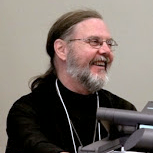
About Fr. Lawrence Farley
Fr. Lawrence currently attends St. John of Shanghai Orthodox Church in North Vancouver, BC. He is also author of the Orthodox Bible Companion Series along with a number of other publications.