
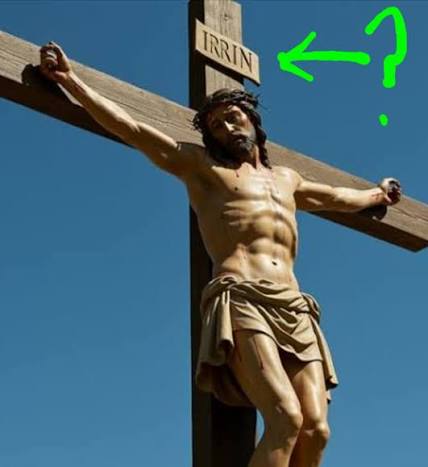
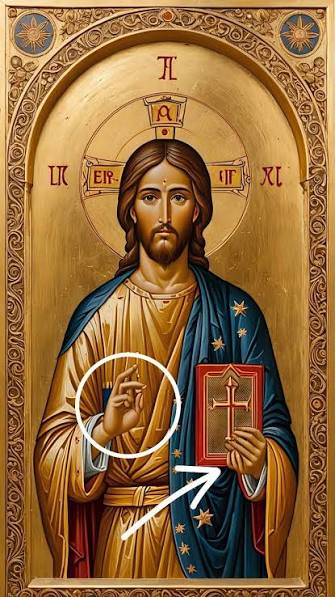
We seem to be living in a day of library reshelving. As one wag said, books formerly found on the “Science Fiction” shelf have been reshelved to the “Modern Technology” shelf, and many books formerly on the “Conspiracy Theories” shelf can now be found on the shelf labelled “Current Events”. This is nowhere more true than with AI which, unless you are just now awakening like the Seven Sleepers of Ephesus, you know stands for “Artificial Intelligence”. Many of the things human beings used to do for themselves or for others are now being done for us by AI. That includes things like writing papers, writing songs, and even producing more AI.
I confess, however, that some AI things are very helpful, things like looking up references. If I want to find, for example, where exactly Chrysostom said something I only half remember, I don’t need to spend countless hours squinting at dozens of books and turning pages books. AI can do all that for me.
This is a great blessing and some Christians are making good use of it. Thus, for example, the wonderful website Theoria (found here), created by wonderful people at the church I attend, pastored by a wonderful priest who is greatly knowledgeable in AI and all things techno; (see his Geek Orthodox podcast here).
Like I said: for busy people, there is lots of wonderfulness found in AI. But what about icons? AI can and has produced lots of icons. Should the Church embrace this technological capability and use such icons?
Purists, both in older days and now, would confine the term “icon” to something painted by an iconographer, and declare that laser copies of the original work made by fancy copy printers are not “true icons” and should not be used.
It is hard to agree, at least on a practical level. Such is the quality of the technology that an untrained eye (like mine) cannot tell the difference between the original painted icon and its laser copy. That is why many places, including some monasteries, not only paint icons but produce and sell mounted laser copies of them. It certainly fills a need, for most people and most church missions cannot afford hand-painted icons and have to make do with the copies. And as long as the iconographer is in some way financially compensated, it is hard to see why such icons should not be used.
But AI icons are different. In the case of laser print reproductions, there was at one time a human being painting the icon; the printed copy simply reproduces that human work. In the case of AI icons, there is no human iconographic labour; the process of human creation is entirely missing.
I believe that it is this element of human creativity that is central to the issue. Other issues— such as whether or not iconographers are justly compensated for their work or questions of copyright or even questions of accuracy (one sees some AI icons with an incorrect number of fingers and misspellings; see images inset above) are important but not central. The act human creativity is.
Nicole Roccas, in her blog Splendid Catastrophe, wrote a piece entitled “AI-Generated Icons? Reclaiming the Incarnation in a Transhumanist World” (available here). In it she wrote “So, can AI produce a convincing icon? Could it reduce costs and effort for churches? Yes— but everything we cheapen carries hidden costs.” I believe the hidden cost here is a diminution of what it means to be human in an increasingly transhumanist world.
Dorothy L. Sayers (d. 1957) wrote about the importance of the human spirit in her 1947 essay “Toward a Christian Esthetic”. In her essay she wrote concerning artists that they “will tell you how it is they produce certain effects…and from that we may get the misleading impression that the technique is the art or that the aim of the art is to produce some sort of effect. But this is not so… The true work of art is something new; it is not primarily the copy or representation of anything. It may involve representation, but that is not what makes it a work of art. It is not manufactured to specification, as an engineer works to a plan… Something has been created… It is significant that the [pagan] Greeks did not have this word [i.e. creation] in their esthetic at all. They looked on a work of art as a kind of techne, a manufacture.”
The hidden cost of which Nicole Roccas warns us is, I suggest, the lack of true creation, reduction of art to techne and, more importantly, of the reduction of what it means to be human. Man is no longer God’s artist, but simply a manufacturer.
God’s Spirit is involved in the creation of all art because His Spirit is essential to true humanity and to what it means to be human and only human beings produce art. As Chesterton reminded us, art is the signature of man. Animals do not produce art as Man produces art. As Chesterton said in his The Everlasting Man, “Monkeys did not begin pictures and men finish them… All we can say of this notion of reproducing things in shadow is that it exists nowhere in nature except in man.”
Man reveals that he was made in the image of the Creator because he alone creates. Animals do not create as Man creates. They eat, breed, fight, raise their young and die but they do not philosophize or receive inspiration from God that takes its form as art. When God breathed His ruach (His breath, His Spirit) into man at creation, He did not merely make him a living anima or soul but a living artist. It is by the Spirit, given to and common to all humanity, that human beings can be identified as truly human. In the Genesis story, God formed the animals, but He breathed into ruach into man alone. And this ruach is what makes the anima into the artist. Note: not just a manufacturer that can assemble things, but an artist who sees a vision and express the vision in a fresh creation, a kind of human sacrament.
The pagan Greeks had an inkling of this, for they attributed artistic creation to the influence of the Nine Muses. (The number is significant; it is why Christian theologians speak of nine ranks of angels.) Creativity for the Greeks therefore did not just mean that the artist was clever. It meant that he was inspired.
If this is true of pagan Greeks and human beings in general, how much more true is it of those in touch with the God of Israel, the true and living God. Thus we read that Bezalel and Oholiab were able to perform their artistic tasks of making the material for the Ark and all the accoutrements of the Mosaic shrine because “the Lord put skill and understanding” in them (Exodus 36:1-2). Their creations were, in some way, the work of the Spirit.
Christian art partakes of this spiritual quality to an even greater degree. The iconographer knows this and cultivates his or her reliance upon the Holy Spirit by fasting and praying before and during the creation of the icon. The Spirit within utilizes the deepest humanity of the iconographer, using his human creativity as the instrument of special creation.
All of this is entirely missing in AI-generated icons. Even if the AI programme can figure out how many fingers and arms a saint has and can borrow techne and pictures from elsewhere, the crucial human element in art is absent. It is not too much to describe it as “inhuman art” in that it is not, like true art, created by a human being. Far less is it spiritual art because, unlike the creation of true icons, the Spirit of God had nothing to do with its creation. The AI icon (an “Aicon?”) is not the visual artistic expression of an experienced vision but a reassembly of disparate images from elsewhere. One iconographer I know and love has a gift for looking at icons and being able to discern things about the person who created them. She said that whenever she looks at AI icons she cannot see anything but hollowness.
Art— especially spiritual art such as iconography— is characteristic of the human spirit. Chesterton knew this. He knew that the basic things, the things common to all men and expressive of their humanity, men must do for themselves. In his book Orthodoxy he wrote that “the most terribly important things must be left to ordinary men themselves— the mating of the sexes, the rearing of the young… [things] like writing a love-letter or blowing his own nose.”
Indeed. No doubt AI could write a better love-letter than I could. It could paint a better crayon picture. But what woman would want her husband to give her a love-letter created by AI? Would the woman cherish such a love-letter? Or what parent would want their young child to create a crayon picture made by AI? Would the parent put the crayon picture with delight on the fridge door? No; Chesterton was right. The most terribly important things must be done by ordinary men themselves, as an expression of their own heart and spirit, whether it be writing a love-letter, making mommy and daddy a crayon picture— or creating an icon.
It is true, of course, that the husband might produce an AI poem that expresses his love better than he could on his own and that his wife, recognizing this, would give him wifely points for his good intentions. Presumably that is why Hallmark cards still sell. But even then the wifely esteem would rest upon the husband’s intention more than on the actual product. All would be would well because the whole aim of the poem was to please the wife.
But it is otherwise in iconography. The good intentions and the humility of the iconographer who said, “AI can produce a better image than I could” may be laudable but they are also irrelevant. They are irrelevant because the whole aim the project was to produce not just a good image, but a Spirit-created image— something which AI cannot do.
Perhaps a text for budding iconographers tempted to use the AI shortcut might be taken from (a slightly tweaked) version of Zechariah 4:6: “Not by computer might, nor by technological power, but by My Spirit, says the Lord of Hosts”.
About Fr. Lawrence Farley
Fr. Lawrence currently attends St. John of Shanghai Orthodox Church in North Vancouver, BC. He is also author of the Orthodox Bible Companion Series along with a number of other publications.