
This November 15 is the 40th anniversary of my ordination as a priest in the Orthodox Church. I mention this not simply as an autobiographical detail but by way of credentials. That is, I am quite familiar with the process of starting a mission. I am hardly alone in this: in that far off day many young priests were starting missions like mine in the Archdiocese of Canada, OCA.
Soon, many priests will be following in our footsteps. The Orthodox Church is currently experiencing an unprecedented surge of growth here in the West. Congregations that have struggled to survive now burst at the seams with new converts. Soon new congregations must be created to hold the new converts as the church buildings in which they currently gather become too small to hold the increased numbers. This means, of course, that more clergy must be found to shepherd these new congregations. It’s a nice problem to have and one that no one (certainly not I) saw coming.
We can therefore expect many new missions to start up in the months and years to come. On behalf of the many clergy of my generation, I would like to share with new priests some white-bearded advice about what to do and what not to do. All of us old priests know where the land mines are buried, because we have stepped on more than a few of them ourselves. I will divide my comments into three parts: liturgical, pastoral, and educational.
First of all, the liturgical.
It is crucial that the new missions serve Liturgy entirely in the vernacular, which in most North American communities will be English, thereby resisting giving the impression that Orthodoxy is a foreign import intended mostly for the families of foreign diplomats.
In Canada, for example, with our multicultural approach, the liturgical use of any other language than English (or French, depending on where you are) is more a signal of a mostly closed ethnic club that emphasizes preserving cultural heritage, customs and language rather than focusing chiefly on outreach spreading the Orthodox faith to all— including to the non-Christians who make up 34% of our Canadian population.
Liturgical use of English (or the vernacular) is essential if the Church is to fulfill its God-given missionary mandate to offer the Gospel to all and make disciples of all nations. Evangelism is not optional; it is crucial for the Church’s survival— both its spiritual survival as well as its numerical and physical survival.
Further, in the founding of a new parish, we need to acknowledge that many founding members of new missions will be relatively new Orthodox themselves from diverse backgrounds— other Christian confessions, atheist and agnostic, Sikh, Muslim, Buddhist and many others. This also reveals the need for instruction in the Orthodox Faith to continue well beyond their reception into the Church through baptism and chrismation. Even founding members need to keep on learning.
Also, starting a new mission gives one the opportunity to return to authentic Tradition. In established parishes, inertia tends to keep practices as they are, regardless of their historical authenticity— including such things as the presence of pews and western-style icons. This is especially so if they were once donated by beloved parishioners. Starting a new mission allows the clergy the opportunity to start afresh and apply the principles they have learned in in seminary— obviously with the blessing of their bishops.
What sorts of seminary lessons can be applied? For one thing, in building a new community one can dispense with pews. For another, one can serve baptismal liturgies on Sunday morning as the ancient church did and as Fr. Alexander Schmemann suggested way back in 1974 in his Of Water and the Spirit. This would emphasize the incorporation of the newly-baptized into the parish community, rather than allowing it to become an “off stage” private family event.
And also, one can abbreviate where necessary and sensible— for example, not telling the catechumens to depart and leave the building when in fact they are expected to stay for the entire service and for the coffee hour.
This is how the mission priests in the diocese of Canada all served (with local variations, of course) in the 1980s when we were all starting our missions from the ground up. We all returned to the first principles of Tradition because the newness of our missions gave us the opportunity. With our bishop’s blessing we could actually apply the lessons we learned in seminary from such visionaries as Fr. Alexander Schmemann and others.
Secondly, some pastoral advice.
Just as important as these liturgical practices (and maybe even more so) is the relationship of priest to his people, of shepherd to flock. His task is not simply to multiply liturgical services for any who may want to attend, but to create family, melding an often disparate group of people into a united and loving community of faith.
The priest, as the loving father to all his parish children, must strive to bring people of diverse background into loving and healthy unity, encouraging them to define themselves by their common Orthodox faith in Christ. He must not allow the parish family to be divided into factions and cliques.
Such factions can more easily take root when they are expressed through the use of different languages in the Liturgy. Indeed, this will sometimes persist into the coffee hour as people will tend to sit in groups and speak various languages. That happens naturally, both with languages of traditional Orthodox countries and with the first languages of converts of various backgrounds, such as Spanish or Chinese. It is therefore all the more important to serve the Eucharist in a language understood by all, the common language of the local mission field. This will provide a powerful force for unity in the parish, as all sing and give responses together in the same language.
And finally, some educational advice about how new priests can continue to learn and grow.
When new priests begin new missions, it is important for them to be mentored by older priests. In the early church, all priests/ presbyters were members of a kind of collegium, a group of leaders surrounding and finding their head in the head-presbyter, soon called “the bishop”. The corporate nature of local leadership was discernible even in the church architecture, for they sat together on a bench up front (called a “synthronon”) on either side of the bishop at the Liturgy. They all functioned as part of a team with the bishop providing their public face and their unity.
In the same sort of way, new priests should strive to work in tandem with other priests. Junior clergy should seek to be taught, led, and guided by the wisdom of the senior priests who have more experience in the difficult work of guiding a flock.
Even if such mentors are not readily available, working in tandem with their young fellow priests is still valuable. That is because although their equally-new colleagues will make mistakes, they may not be exactly the same mistakes as they will make. Humility and a desire to be taught can go a long way towards avoiding catastrophic missteps in guiding and working with congregations. As one of the Desert Fathers said, “If you see someone who has made shipwreck, know that the person was self-directed.” We all need teachers and mentors, especially when we are just beginning our work. Going it alone thinking that you don’t need any help or direction is often a recipe for disaster.
As old and weathered mission priests can attest, there is nothing harder but also nothing more rewarding than building an Orthodox community from the ground up. It is a task which one cannot (or should not) attempt alone. A mission priest does not labour all by himself but as part of a team. He has his bishop as his head, his senior priests and seminary instructors as mentors, and his fellow local Orthodox clergy as his brothers and he must lean them as sources of wisdom and strength, regularly consulting his brother priests, both giving and drawing counsel and encouragement from them.
As new converts continue to surge into the Church, new missions can be expected in the future. The harvest is plentiful and currently the labourers are few. We must pray earnestly to the Lord of the harvest to send out labourers fit for task (Matthew 9:38). For what the new mission priests build in the next few years will lay a foundation for many years to come.
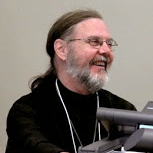
About Fr. Lawrence Farley
Fr. Lawrence currently attends St. John of Shanghai Orthodox Church in North Vancouver, BC. He is also author of the Orthodox Bible Companion Series along with a number of other publications.