
Recently an angry man turned up in my Facebook feed denouncing another man in Britain who objected to what some Muslims were doing there (specifically raping young girls). The angry man said that those in Britain protesting such a Muslim presence were Islamophobic since they were only concerned with Muslims and not with Islam itself, since (for example) they never wanted to discuss the prophethood of Muhammad.
Like almost all words ending in “-phobia/ -phobic”, the word “Islamophobic” is not so much a verbal descriptor as it is a verbal weapon. That is, it is used not to advance rational discussion and debate but to shut it down. The one pinning the label on his debating partner intends to deprive him thereby of all credibility and to win the (abruptly shortened) debate by default. If one is convicted of being “phobic” then that person is automatically wrong and there is no need to continue with the actual debate.
With the exception of such conditions of “agoraphobia” (fear of open spaces) and “arachnophobia” (fear of spiders) such descriptors should be studiously avoided if one intends to debate an issue on its own merits. The angry man thought that a better debate than the behaviour of some British Muslims would be the prophethood of Muhammad. I agree, for the question is more fundamental to the issue than is the question of the bad behaviour of some British Muslims.
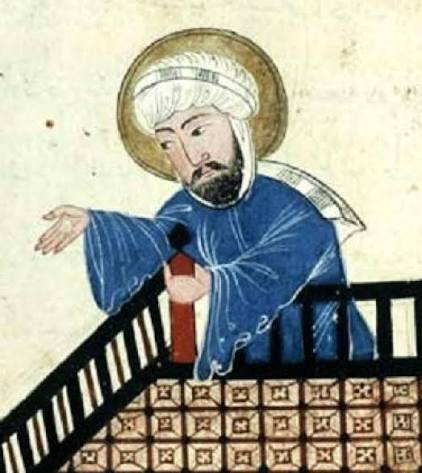
So, let’s talk about Muhammad. A detailed look at the early history of his movement reveals that Muhammad was primarily a warlord who claimed to speak for God, not a prophet who just happened to fight battles. That is, he gathered an army around him and with it waged war on surrounding tribes and cities. (For a scholarly, secular, and unbiased historical look at the topic, see the 2010 book written Islamic scholar Fred M. Donner Muhammad and the Believers at the Origen of Islam published by Harvard University Press.)
After taking his movement to Medina Muhammad conquered the city of Mecca in 630 A.D. Two years later, Muhammad died in his city of Medina in 632 A.D. and his movement (i.e. his army) was taken over by Abu Bakr who succeeded to his title “the Commander [Arabic amir, a military title] of the Faithful”. Two years after that Abu Bakr died, leaving ‘Umar as the next Commander of the Faithful. After ‘Umar’s death in 644 A.D., ‘Uthman became the next Commander.
During all this time, the army continued its work of raiding, killing, and plundering. To quote Donner: “A victory would be followed not by an immediate return of the army homeward, but by the thought of moving on to the next objective in the campaign of spreading God’s rule.” (p. 104).
Those men who succeeded Muhammad as head of his army did not all die peacefully. As you might expect from a military movement whose raison d’être was the individual acquisition of wealth, slaves, and land, there was a continual power struggle among his followers. In fact, Abu Bakr (whose succession was hotly contested by a number of the tribal leaders) was the only one of the original Commanders of the Faithful to die peacefully. ‘Umar who succeeded Abu Bakr was assassinated by a Persian slave. He was succeeded by ‘Uthman, the last years of whose leadership were marked by discontent leading to an armed revolt and a siege upon his home. He also ended his days by being assassinated.
His assassination led to further revolts and struggles for power among Muhammad’s followers, including civil wars spread over decades one of which resulted in a perpetual schism between the followers of ‘Ali and others in Muhammad’s army (thus the present hostility between Sunni Muslims and Shia Muslims).
These series of civil wars among the followers of Muhammad in the decades after this death are reminiscent of the civil wars among the generals of Alexander the Great after his death—and for the same reason. That is, these early Islamic wars bear witness to the essential military character of Muhammad’s movement. Concerning these civil wars among contending rivals Donner wrote, “the civil wars were striking for the savagery with which they were carried out. There are many episodes in which our sources describe captives being executed in cold blood, in which sons are executed before their fathers or men killed by or at the order of their relatives in which the vanquished were massacred in large numbers” (p. 189). The origins of Muhammad’s movement are soaked in blood. This is hardly surprising since Muhammad was primarily a warlord.
And Muhammed was not the only warlord claiming to speak for God as His prophet in his day. To quote Donner again: “In a series of decisive battles [Muhammad’s general Khalid ibn al-Walid] defeated powerful groups in the region of northern Arabian called Najd, some of which were led by people claiming also to be prophets like Muhammad…The ‘false prophet’ Talha ibn Khuwaylid of Asad, who had been active already in Muhammad’s day was defeated…the tribe of Tamim and their ‘false prophetess’ Sajah joined the most potent of all Medina’s rivals, the ‘false prophet’ Musaylima and his tribe, the Hanifa”. (p.101). It seems clear that Muhammad was but one of a number of Arabian military leaders waging war against rival tribes and claiming to speak for God. It would seem that such prophetic apocalypticism was in the air in Arabia at that time.
And what of Muhammad himself? The first extant biographical sketch dates from well over a hundred and fifty years after his death (as compared to the Gospel sketches of Christ’s life which date from mere decades after His death) but the picture it paints is clear enough. He was, as one would expect from the movement he initiated and left behind, a warlord with all the virtues and vices expected from such a person.
That is, he was a man of courage and charisma, a true leader able to inspire men to fight for him. His claims to prophethood seem to have been less important to his followers than his success in battle and the promise of plunder. Some of his sayings, preserved in the Qur’an, witness to his fundamental character as an Arabian warlord: “Prophet, urge the believers to fight…Enjoy in a good and lawful manner the things you have gained in war and be mindful of God; He is merciful and forgiving” (Q. 8:65-69). Also, in Q. 4:24 we read concerning women, “All married women [are forbidden to you] save those [captives] whom your right hands possess”. This refers to women taken as slaves and plunder during raids and wars.
Note that women taken in wars are regarded as legitimate sexual plunder. As well as witnessing to the ingrained cultural misogyny of seventh century Arabia, it also witnesses to the underlying nature of Muhammad’s movement as that of a warlord concerned with plunder gathered from raids. This further explains the Qur’anic vision of Paradise as a place where a man will enjoy such sexual plunder having access to many virgins (see Q. 56:11-38, 78:31-34).
We also note Muhammad’s abiding interest in women. Islamic law limited the number of wives a Muslim could have to four, but Muhammad was not limited to any number. In Q. 33:50 we find that he received a revelation from Allah saying that he could have as many wives as he wanted but this allowance was for him only: “This is only for you and not the rest of the believers”.
We note as well that Muhammad became infatuated with Zainab, his cousin. Zainab was unfortunately already married to a man named Zaid, Muhammad’s adopted son. Despite the incestuous nature of the relationship, Zaid was willing to divorce his wife so that Muhammad could have her and to confirm that the incestuous union was acceptable Muhammad received another revelation from Allah allowing it (Q. 33:2-7). (It is said that one of Muhammad’s other wives commented drily that “your God truly seems to have been very quick in fulfilling your prayers”.)
And then of course we have the “marriage” of Muhammad to Aisha when she was six years old and the “consummation” of the marriage when she was nine years old (thus the traditional Islamic source Sahih al-Bukhari) about which the less said the better.
We also note the extraordinary savagery, brutality, and fury of Muhammad in warfare. According to the same Islamic source cited above, Muhammad sent assassins to kill his enemies in their sleep and even to deceive and abuse trust in order to assassinate. He led battles against unarmed cities. He allowed even women and children to be killed during night-time raids. Even by the standards of a brutal age, this was unusual brutality.
Much more could be said from the Qur’an and from the early history of Muhamad’s raids and wars to document Muhammad’s fundamental role as a seventh century Arabian warlord. But was he also a prophet? The errors of his supposed prophecies reveal that he was not but that like other such pretended prophets of his day, he simply undergirded his monotheistic military movement with divine claims, justifying his raids with an ancient Arabic equivalent of Gott Mit Uns. (For some details of Muhammad’s historical howlers see here or my book Exploring Islam.)
At the end of the day, the legitimacy of Islam falls to the ground along with the unconvincing claims that Muhammad was a true prophet. Far from being sent by God with a revelation for mankind, he was a false prophet, a warlord whose main goal was gaining power and wealth through warfare. As Donner has suggested, the religion of Islam emerged after his death as a reconfiguration of his original legacy and a rewriting of his early history.
Given this, it is hardly surprising that violence attended the immediate spread of Islam after Muhammad’s death and that it has marred (some would say “characterized”) Islam ever since. This, I suggest, is the fundamental question that needs first to be addressed in any discussions of Islam in the West. It is not of merely historical interest, as the violence done to 250,000 British girls reveals.

About Fr. Lawrence Farley
Fr. Lawrence currently attends St. John of Shanghai Orthodox Church in North Vancouver, BC. He is also author of the Orthodox Bible Companion Series along with a number of other publications.