
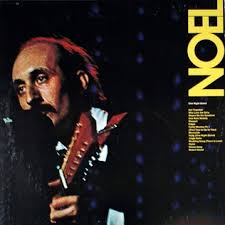
In a day like ours when there is so much hatred, conflict, and gender confusion, it might be worthwhile to remember a song and a message from a somewhat earlier and saner time— in particular, the Wedding Song, written by Noel Paul Stookey, famous as part of the folk trio Peter, Paul and Mary. He wrote the song and performed it when he was Best Man at the wedding of fellow singer Peter Yarrow in St. Mary’s Catholic Church in Minnesota in 1969. He later recorded it on his first solo album entitled Paul And (i.e. “‘Paul’ as in ‘Peter, Paul And Mary’”) in 1971 (see inset above). It would go on to be a favourite at weddings and covered by such singers as Petula Clark.
The song is deceptively simple for a song which contains such an abundance of theology (Stookey is a devout Christian)— so much so that I will exegete it here, verse by verse. (The song can be accessed online here.)
He is now to be among you at the calling of your heart.
Rest assured this troubadour is acting on His part.
The union of your spirits here has caused Him to remain
for whenever two or more of you are gathered in His name
There is love, there is love.
The song begins with the Church— not the institution we read about in the newspapers that sometimes makes headlines, but the gathering together in one place of the baptized and devout faithful who love Jesus. For the word “church”, ἐκκλησία/ ekklesia in the Greek, denotes not an institution but a gathering, an assembly for any purpose (compare its use in Acts 19:41). Christ promised that when His faithful disciples gathered together in His name— i.e. gather as His faithful disciples— He would then be among them (Matthew 18:20). This invisible presence of Christ in the midst of His gathered disciples is what is meant by the word “Church” and all of its structures, offices, rules, canons, and doctrines exist only to serve and preserve this presence. It is a matter of love, of human hearts calling to the heart of God: Christ manifests Himself among us “at the calling of our hearts” because we love Him and want Him near. The Church is not institutional at its essence, but the presence of love.
But this does not mean that its structure and offices are superfluous or mere bureaucratic adornments, like frosting on a cake. No, they are necessary, for the gathering speaks through a chosen representative (drearily referred to as “clergy”) and Christ works through such representatives as He manifests His presence. It might be the priest who does the physical baptizing, but the power of baptism which bestows forgiveness, new birth, and sonship comes from Christ. Christ therefore does the actual baptizing; He just uses the limbs and voice of the priest when He does it.
It is the same with the Eucharist: it is the priest who prays the consecrating prayer and administers the sacrament, but the saving Gift is really received from the hand of Christ. The priest is just Christ’s instrument, or in western terms, an alter Christus.
This is why the song calls the priest a “troubadour”, a poet-singer. The priest does not speak for himself, but for the Lord. He is acting a role, a performing a part. But one can rest assured that he is acting on His part, obeying and performing the role that the Lord gave him.
This then is the Church: a union of Christian spirits gathered in His name. It is this union which causes the Lord, ever faithful to His promise, to remain among them. And when He does remain among them, there is love— His love for us and our love in response to Him.
Well a man shall leave his mother
and a woman leave her home.
They shall travel on to where the two shall be as one.
As it was in the beginning, is now until the end.
Woman draws her life from man and gives it back again
and there is love, there is love.
Then, as the sacramental expression of Christ’s loving union with His people, we find the marriage of one man to one woman. Marriage is a journey, a life-long one, like the journey that Abraham took looking for the Promised Land. And like the journey of Abraham, it begins with a renunciation, a departure, a separation. Abraham (or “Abram” as his name-tag then read) was commanded by God to leave his country and family and his father’s house and to journey into the great and scary unknown (Genesis 12:1).
In the same way, a man leaves his mother— i.e. the one who bore him and gave him life— and a woman leaves her home, the only place of safety and familiarity she has ever known. Like Abram, man and woman are called to leave their past life, severing connections, to travel on together.
This severing and joining, this journey into an unknown future, will bind them together so that the two shall be as one. Before they were two; now they are one, a brand new organism. Their life, with all its triumphs and sorrows will be shared and mutual. They will walk together on the same road, eating together from the same plate (metaphorically speaking), drinking from the same cup, enlivened by the same joys, wounded by the same blows. This was promised by God in the Garden: “a man shall leave his father and mother and be joined to his wife and the two shall become one flesh” (Mark 10:7-8, Genesis 2:24). It begins at the wedding ceremony, but it does not end after the guests have gone home. Rather, the journey lasts throughout life and beyond, into the Promised Land.
This union of husband and wife, of man and woman, male and female, is not a “gender construct” or something merely cultural and arbitrary, like the decision to drive on the right side of the road rather than on the left. The union is from God and is eternal. As the final Trinitarian doxology found in the western tradition as the conclusion for a psalm says, “As it was in the beginning, it is now and will be until the end”. Marriage (or to give its other names, “family, survival of the race, and human civilization”) has always existed in human history and always will exist, however much it currently finds itself under western threat. For it is built on the foundation of sexual complementarity.
Such is the insanity afflicting our age that this complementarity is sometimes denied and tragic exceptions (such as intersex conditions) are allowed to jettison the norm and define the issue. But the complementarity resists such insane attempts at denial. This accounts for the love poetry throughout the ages as well as for teenage crushes and stories of romance.
In this complementarity the woman draws her life from man as from her head and gives the life back to him so that he draws his life from her. There is hierarchy in the relationship but also equality as both depend upon each other in a relational symbiosis. That is why St. Paul wrote that husband and wife do not possess authority over their own bodies but that each possess authority over the bodies of the other (1 Corinthians 7:4).
Given the abundance of love poetry, teen age infatuation, and romantic stories, one might gain the erroneous impression that all this complementarity means that marital harmony comes effortlessly. Hollywood rom-coms certainly suggest this. But, as any long-married couple can attest, it is not so. The intimate union of man and wife is the intimate union of two sinners and it does not take long for each of them to discover this. Even the World will tell you that “marriage is work” (though they usually refrain from sharing this insight at weddings), and the Church (always more realistic) will tell you that marriage is martyrdom. Indeed, the crowns with which the married couple are crowned in an Orthodox wedding ceremony are often compared to the crowns with which martyrs are crowned as a reward for their sufferings and endurance. Harmony within marriage does not come automatically; it is not an inevitable fruit of the initial infatuation. Rather, it is the result of forbearance, patience, self-sacrifice, and a determination to be kind. It is in this sustained effort that “there is love”.
Well then what’s to be the reason for becoming man and wife?
Is it love that brings you here, or love that brings you life?
Or if loving is the answer, then who’s the giving for?
Do you believe in something that you’ve never seen before?
There is love, oh there’s love.
The thought of effort, martyrdom, and the self-crucifixion of ego brings with it the question: “What’s to be the reason for becoming man and wife?” Most would answer: “love”— it is love that brings bride and groom to church and to marriage; it is love that brings life to their hearts and makes them feel truly alive. But this answer brings with it a further question: “If loving is the answer, then who’s all that patient giving for?” In other words, is the mutual love and the marriage relationship an end in itself?
For what if the love fades? What if the discovery (almost certainly the mutual discovery) that one’s partner is a sinner causes the love and infatuation to wither? What then? For if love (i.e. a feeling of euphoria and fascination) dies, should the couple stay together? The existence of children within the marriage argues for it and against divorce, but is that enough? And what about when the kids grow up and leave? Who is all that giving and self-sacrifice for anyway?
The answer comes in the form of another question: “Do you believe in something that you’ve never seen before?” That is, do you believe in Christ?
Christ remains physically unseen in the home and the marriage, yet He is the invisible host at every meal, the invisible listener to every conversation, the true head of the home. By concentrating upon Him one can find the resources and strength to recognize one’s own sins and repent, to find healing for an ailing marriage. For the ultimate purpose of marriage is not mutual happiness and fulfillment, and it is not even the procreation and raising of children. It is the glory of Christ. If we are truly His disciples, our bodies and lives are meant to reflect His glory and that means that our marriage must reflect His glory too. That is what St. John Chrysostom meant when he described the Christian home as “a little church”. Like a church, the marriage is meant to be a place where Christ’s love can be found and where discerning eyes can see His glory.
Oh the marriage of your spirits here has caused him to remain
for whenever two or more of you are gathered in his name
There is love, ah, there’s love.
That is why the final verse of the Wedding Song changes a word when it ends the song by repeating the first verse. The first verse said that it is the union of our spirits which causes Christ to remain when we gather in His name. In this final verse, Stookey sang of the marriage of our spirits, for the marriage union of husband and wife reflects the eternal union of Christ with His bride, the Church (see Ephesians 5 for the details).
St. Paul’s image and insight was a daring one: the Genesis passage spoke of Adam and Eve as two people, husband and wife, but also as a single person, one flesh. Paul said that was exactly what they experienced when they gathered as a church, for there they were not only the Bride of Christ, protected and loved as a man protects and loves his bride, but also the Body of Christ, having so close a union with Him that He lived and worked through the Church in the same way that a man lived in his body. Christ and His Church were two things, but they were also one thing. The marriage of the spirits of husband and wife may reflect this glorious union if both will look to the Lord.
The Wedding Song was a wonderful offering to the Church in its day. Stookey always said that he felt it came ultimately from the Lord and that Christ simply used him to pass the gift along. I am glad that he did. Perhaps we could conclude by hearing and experiencing the gift one more time here.
About Fr. Lawrence Farley
Fr. Lawrence currently attends St. John of Shanghai Orthodox Church in North Vancouver, BC. He is also author of the Orthodox Bible Companion Series along with a number of other publications.